

Start with a simple truth: good bread doesn’t need kneading, long proofing, or a sourdough starter you talk to like a pet. Ever had that craving for warm, rustic bread that you can throw together in under an hour? I sure have, and that’s why I keep coming back to soda bread. I learned this one from a family friend in Ireland, and every time I bake it I think, “Why did I ever overcomplicate bread?” Want a straightforward, honest loaf that fills the kitchen with comfort? You’re in the right place. Also, if you like a bit more reading or variations, check out this traditional soda bread guide I found helpful when I first started.
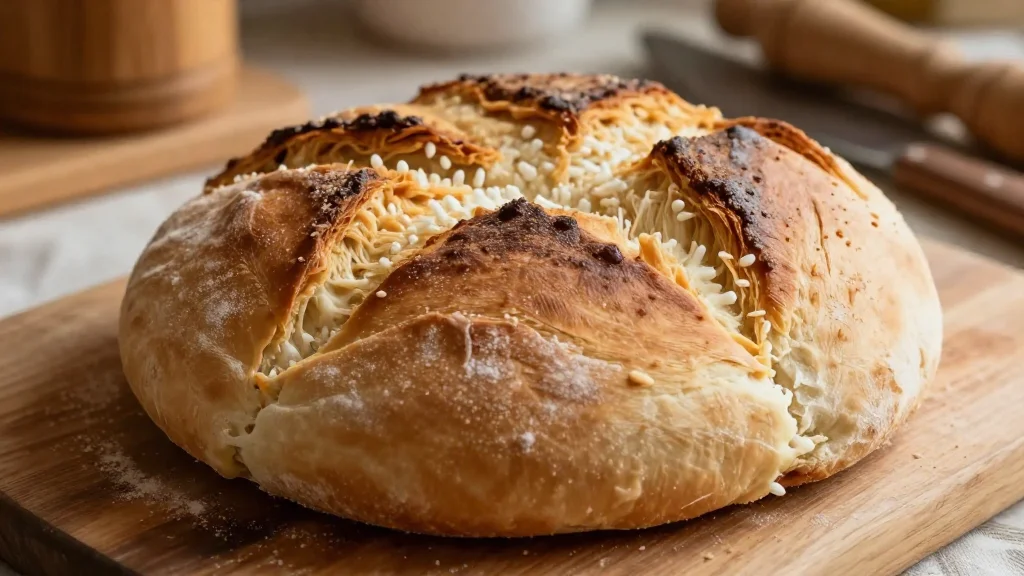
Why You’ll Love This Recipe
- Fast and forgiving: You mix, shape, and bake—no fussing with yeast or rise times.
- Rustic flavor: The tang from buttermilk gives the bread a subtle, tangy depth.
- Minimal ingredients: You probably already have everything in your pantry.
- Great texture: Crusty outside, soft and crumbly inside—perfect for butter or stew.
- Versatile: Eat it plain, toasted, or use it to mop up soups. Why not both?
Ingredients You’ll Need
- 4 cups all-purpose flour
- 1 teaspoon baking soda
- 1 teaspoon salt
- 1 3/4 cups buttermilk
Yep, that’s it. No sugar, no eggs, no drama. If you want to add raisins, seeds, or herbs later, I’ll show you how in the variations section.
How to Make (Step-by-Step)
Mix the dry ingredients
Preheat your oven to 425°F (220°C). In a large bowl, mix together the flour, baking soda, and salt. Make a well in the center and pour in the buttermilk. Stir until the dough comes together.
Form and shape
Turn the dough onto a lightly floured surface and knead gently for about 1 minute. Shape into a round loaf and place on a baking sheet. Cut a deep ‘X’ into the top of the loaf.
Bake it
Bake for about 30 minutes or until golden brown and sounds hollow when tapped on the bottom. Allow to cool on a wire rack before slicing.
That’s the whole method. No proofing, no waiting around for yeast to throw a tantrum. You bake it, you eat it—simple as that.
Pro Tips for the Best Results
- Measure by weight if you can: Flour packs differently; a scale gives consistent results.
- Don’t over-knead: Work the dough just until it holds together. Overworking makes the bread dense.
- Keep that X deep: The slash helps the heat penetrate and the loaf to rise properly. Don’t be shy.
- Buttermilk swap: If you’re out of buttermilk, mix 1 3/4 cups milk with 1 3/4 teaspoons lemon juice or vinegar, let it sit for 5 minutes, then use. FYI, it works surprisingly well.
- High oven, hot bake: That initial high heat creates the crisp crust. Try not to open the oven for the first 20 minutes.
Fun Variations & Topping Ideas
Variations:
- Sweet raisin soda bread: Add 3/4 cup raisins and a tablespoon of sugar for a snacky loaf.
- Herb & cheese: Fold in 1/2 cup grated cheddar and 1–2 tbsp chopped fresh herbs (rosemary or thyme).
- Whole grain twist: Substitute 1 cup of the all-purpose flour with whole wheat for nuttier flavor.
- Spiced: Add a pinch of cinnamon and nutmeg for fall vibes.
Toppings:
- Butter & sea salt: Classic and unbeatable.
- Honey and ricotta: Fancy without trying too hard.
- Garlic butter: Rub the crust with garlic butter right out of the oven—thank me later.
- Jam or marmalade: If you go sweet, pair with a tangy preserve.
Storing and Reheating
Store leftover bread at room temperature in a paper bag or wrapped in a clean tea towel for up to 2 days. I avoid plastic unless I plan to refrigerate because plastic softens the crust faster.
If you refrigerate, slice and wrap tightly; the fridge keeps it a bit longer but dries it out. Reheat slices in a toaster or in the oven at 350°F (175°C) for about 10 minutes to bring back crispness.
Freezing works great: slice the loaf, wrap slices individually, and freeze up to 3 months. Toast straight from frozen or thaw on the counter for 30–60 minutes.
Leftover ideas
- Bread pudding: Cube the loaf, soak in custard, bake—comfort guaranteed.
- Croutons: Cube, toss with oil and herbs, roast until crisp.
- Stuffing: Use stale pieces for an easy, rustic stuffing.
- French toast: Soda bread makes a bready, slightly tangy French toast. Trust me, it’s surprisingly good.
Frequently Asked Questions (FAQ)
What makes soda bread different from yeast bread?
Soda bread uses baking soda and an acidic liquid (buttermilk) to rise instantly. Yeast bread relies on fermentation and time. Soda bread gives you that fresh-baked feeling without the scheduling commitment.
Can I use self-rising flour?
You can, but I don’t recommend it because self-rising flour already contains leavening and salt. If you use it, skip the baking soda and salt adjustments. IMO, stick to all-purpose and control your salt.
Why did my bread come out dense?
You likely overworked the dough or packed too much flour. Keep it loose and gentle. Also check your baking soda’s freshness; if it’s old, it won’t react properly.
How do I make it dairy-free?
Use a plant-based buttermilk substitute—mix non-dairy milk and a splash of vinegar or lemon juice and let it curdle for a few minutes. The acid matters for the reaction.
Conclusion
This Traditional Irish Soda Bread recipe gives you a quick, reliable loaf that tastes like comfort and looks like effort—even when it didn’t take much. You get crisp crust, soft crumb, and the joy of fresh-baked bread in under an hour. Try it plain the first time, then experiment with the variations I suggested. If you want an alternate take or extra historical notes, check out this classic Traditional Irish Soda Bread for more inspiration. Leave a comment and a rating if you bake it—I read every single one, and I love hearing about your tweaks and happy accidents. Happy baking 🙂

Irish Soda Bread
Ingredients
Method
- Preheat your oven to 425°F (220°C).
- In a large bowl, mix together the flour, baking soda, and salt. Make a well in the center and pour in the buttermilk. Stir until the dough comes together.
- Turn the dough onto a lightly floured surface and knead gently for about 1 minute.
- Shape into a round loaf and place on a baking sheet. Cut a deep ‘X’ into the top of the loaf.
- Bake for about 30 minutes or until golden brown and sounds hollow when tapped on the bottom.
- Allow to cool on a wire rack before slicing.