

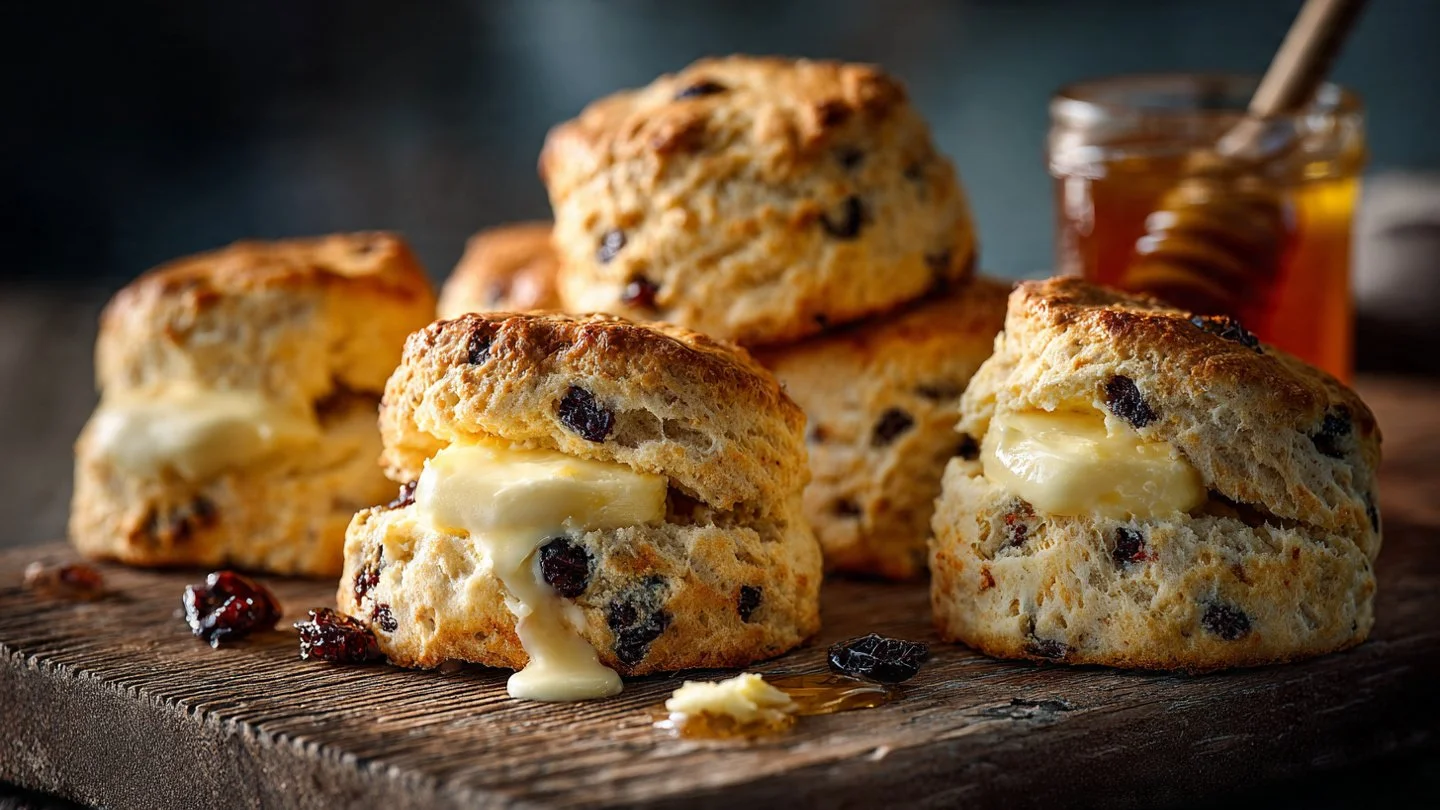
Ever bitten into a scone that shatters into buttery layers and thought, “How did they do that?” I have, and I got obsessed. The star ingredient here? Cold butter — yes, the boring-looking cube that does all the magic. Stick with me and I’ll show you a simple, truly flaky scones recipe that tastes like Sunday morning without the drama.
I developed this recipe after ruining more than my fair share of tea times. I learned to treat the butter like treasure, the dough like a moody friend, and the oven like a finicky cat. By the end of this piece you’ll have a clear recipe, solid technique, and a few fun twists to try. Let’s get flaky (in a good way).

Why You’ll Love This Recipe
- Super flaky texture thanks to cold, cubed butter and gentle handling.
- Quick to make — no yeast, no rising, no babysitting the dough.
- Flexible: play with fruits, spices, or savory add-ins.
- Great for leftovers — you can reheat and still get near-fresh results.
- Perfect with marmalade butter, because yes, life gets better with marmalade.
Ingredients You’ll Need
- 2 cups all-purpose flour
- 1/4 cup granulated sugar
- 1 tablespoon baking powder
- 1/2 teaspoon salt
- 1/2 cup unsalted butter, cold and cubed
- 1/2 cup heavy cream
- 1 large egg
- 1 teaspoon vanilla extract
- Marmalade butter for serving
How to Make (Step-by-Step)
1. Preheat your oven to 400°F (200°C).
I preheat the oven first so everything moves quickly once the dough’s ready. Time matters when butter stays cold.
2. In a large bowl, whisk together the flour, sugar, baking powder, and salt.
I use a whisk and a big bowl. This ensures even leavening and no flour lumps.
3. Cut in the cold butter until the mixture resembles coarse crumbs.
Toss the cold, cubed butter into the flour and use a pastry cutter or two forks. I sometimes grate the butter for speed. Work fast. Keep visible butter pieces — they create the flaky layers.
4. In a separate bowl, mix the cream, egg, and vanilla extract.
Whisk those wet ingredients until smooth. The cream gives richness; the egg binds without drying.
5. Gradually add the wet ingredients to the dry ingredients and stir until just combined.
Use a wooden spoon or spatula and stop once you see pockets of flour. Overmixing melts the butter and ruins the flakiness.
6. Turn the dough onto a floured surface and knead gently.
I press and fold the dough 3–4 times. Be gentle. You want gatherings of butter distributed throughout, not a smooth bread dough.
7. Roll out the dough to about 1 inch thick and cut into desired shapes.
I aim for 1 inch thickness for the perfect rise. A round cutter gives classic scones; a knife gives rustic wedges.
8. Place on a baking sheet and bake for 15-20 minutes or until golden brown.
I space them with room to breathe and pop them into the oven immediately. Watch the color — golden means done.
9. Serve warm with marmalade butter.
Slather with marmalade butter while warm and consider the small victory. Seriously, it’s worth it.
Pro Tips for the Best Results
- Keep everything cold. Chill your butter, chill your bowl if needed, and work quickly.
- Don’t overmix. Combine until just held together; your hands warm the dough, so be efficient.
- Use heavy cream for richness. Milk turns out denser scones.
- Grate the butter to speed things up. This gives tiny flakes and cuts prep time.
- Brush with cream before baking for a glossy top.
- Cut thick, not thin. Thicker scones rise better and stay flaky.
- If you add fruit, toss it in flour first to keep it from sinking.
- Rotate the pan halfway for even browning if your oven runs hot on one side.
Fun Variations & Topping Ideas
Variations:
- Classic Lemon & Poppy Seed: Add 1 tablespoon lemon zest and 1 tablespoon poppy seeds to the dry mix.
- Cheddar & Chive (savory): Reduce sugar to 1 tablespoon, fold in 3/4 cup grated cheddar and 2 tablespoons chopped chives.
- Raspberry & White Chocolate: Fold in 3/4 cup fresh raspberries and 1/3 cup white chocolate chips. FYI, fresh berries create a mess but taste amazing. 😉
Toppings:
- Marmalade butter (obviously) — combine softened butter with orange marmalade.
- Honey butter — mix butter with a touch of honey and sea salt.
- Clotted cream & jam for the traditionalist.
- Maple glaze — powdered sugar, maple syrup, and a dash of milk.
Storing and Reheating
Store scones in an airtight container at room temperature for up to 2 days. For longer storage, freeze them in a zip bag for up to 1 month. Reheat from frozen by wrapping in foil and placing in a 325°F oven for 10-15 minutes. For a quick fix, microwave for 10–15 seconds, but the oven keeps crisp edges. I usually reheat in the oven because I like the crunch on the outside.
Leftover ideas
- Toast split scones and top with scrambled eggs for a luxe breakfast sandwich.
- Crumble leftover scones into yogurt or baked fruit — instant crumble layer.
- Make a sweet bread pudding by cubing scones, soaking in an egg-cream mixture, and baking.
- Transform scones into French toast because why not? Dip in egg batter and pan-fry until golden.
Frequently Asked Questions (FAQ)
How do I make scones extra flaky?
Keep the butter very cold and handle the dough as little as possible. Fold rather than knead, and bake immediately. The cold butter creates steam pockets that make layers.
Can I use frozen berries?
Yes, but toss frozen berries in a little flour and add them straight from frozen. They release water as they bake, so reduce cream by a tablespoon if the dough looks wet.
Can I make these dairy-free?
You can swap coconut oil for butter, but you’ll lose a bit of that classic butter flavor and flakiness. Use thick, full-fat plant milk for the cream substitute.
Why did my scones turn out dense?
You likely overworked the dough or used too much liquid. Measure carefully and stop mixing the moment the dough comes together.
Can I freeze raw scones before baking?
Yes, place cut scones on a tray, freeze until solid, then transfer to a bag. Bake from frozen; add a few extra minutes.
Conclusion
If you want a reliable, flaky scone that impresses without fuss, this recipe delivers. I love how the cold butter and minimal handling reward patience with layers that practically flake themselves. Try the variations, keep the butter cold, and don’t be afraid to experiment with toppings — scones forgive curious bakers more often than not.
If you want a riff with raspberries specifically, check out Flaky Raspberry Scones | Sarah Kieffer for more inspiration. Drop a comment and give the recipe a rating if you try it — I read every one and I actually care. IMO, nothing beats sharing scones and stories. 🙂

Apricot Orange Soda Bread
Ingredients
Method
- Preheat your oven to 400°F (200°C).
- In a large bowl, whisk together the flour, sugar, baking powder, and salt.
- Cut in the cold butter until the mixture resembles coarse crumbs.
- In a separate bowl, mix the cream, egg, and vanilla extract.
- Gradually add the wet ingredients to the dry ingredients and stir until just combined.
- Turn the dough onto a floured surface and knead gently.
- Roll out the dough to about 1 inch thick and cut into desired shapes.
- Place on a baking sheet and bake for 15-20 minutes or until golden brown.
- Serve warm with marmalade butter.