

It’s pomegranate season, and you know what that means – it’s time to get that gorgeous, ruby-red goodness into a jar! If you’re anything like me, the thought of making homemade pomegranate jelly is super exciting, but maybe also a tiny bit intimidating. Don’t worry, though. We’re going to tackle this together, just like we’re hanging out in the kitchen with a cup of coffee (or, you know, a glass of wine – no judgment here!).
I remember my first attempt at pomegranate jelly. Let’s just say it involved more scrubbing than I anticipated, but the end result? Absolutely worth it. That bright, slightly tart, wonderfully sweet spread? Pure magic on toast, scones, or even swirled into yogurt. If you’ve ever found yourself staring at a jar of store-bought jelly and thinking, “I bet I could do better,” well, you’re in the right place! This isn’t just about making jelly; it’s about capturing the essence of those vibrant pomegranate seeds and transforming them into something truly special.
Ready to dive into the wonderful world of homemade pomegranate jelly? Let’s get our hands a little sticky!
Why Homemade Pomegranate Jelly Rocks
Honestly, why bother making your own when you can grab a jar off the shelf? Great question! For starters, the flavor. Store-bought jellies often have that artificial taste or are loaded with things you can’t pronounce. When you make it yourself, you control exactly what goes in. That means no weird additives, just pure, unadulterated pomegranate goodness.
Plus, there’s a certain satisfaction, right? Creating something delicious from scratch with your own two hands. It’s like a little edible art project. And let’s be real, homemade gifts are always the best gifts. Imagine your friends and family’s faces when you present them with a jar of your beautiful, homemade pomegranate jelly. Priceless!
And if you’re thinking, “Is it hard?” – nah, not really. Once you get the hang of it, it’s pretty straightforward. You might even find yourself wondering, “How to make pomegranate jam?” and realizing it’s not much different.
Getting Your Pomegranate Game On
First things first, you need those glorious pomegranate seeds, also known as arils. They’re the stars of our show!
Selecting the Best Pomegranates
Picking good pomegranates is key. You want ones that feel heavy for their size – that usually means they’re juicy. The skin should be smooth and taut, with a vibrant color. Avoid any with soft spots or blemishes. A slightly rounder shape is often a good indicator of ripeness, and the blossom end (where the flower was) should be dry and papery, not mushy.
Extracting Those Precious Arils
This is the part that can get a little messy, but it’s totally manageable. Here’s my go-to method:
- Score the pomegranate: Using a sharp knife, carefully score the skin around the middle, just deep enough to cut through the rind but not into the seeds.
- Twist and separate: Gently twist the two halves apart.
- Submerge in water: This is the secret trick! Turn one half over a bowl of cool water and gently tap the back of the pomegranate with a spoon. The arils will fall into the water, leaving the pith behind. The pith bits will float, and the arils will sink.
- Strain and rinse: Skim off any floating pith, then strain the arils through a colander. Give them a quick rinse if needed.
See? Not so bad. You’ll end up with beautiful, jewel-like arils ready to go.
The Core Recipe: Easy Pomegranate Jelly
Alright, let’s get down to business. This recipe focuses on getting a fantastic pomegranate jelly, homemade style, with minimal fuss.
Ingredients You’ll Need
- Pomegranate Juice: About 4 cups. You can juice your own arils (it’s easier than you think!) or use good quality store-bought juice. Make sure it’s 100% juice, no added sugar or flavors.
- Sugar: Around 3.5 to 4 cups. The exact amount can depend on your juice’s sweetness and your personal preference.
- Pectin: 1 packet (usually for 4 cups of liquid). Use a powdered pectin designed for making jam and jelly.
- Lemon Juice: 2 tablespoons. This helps with flavor and setting.
Equipment Checklist
- Large, heavy-bottomed saucepan
- Jars with lids (sterilized, of course!)
- Canning funnel
- Ladle
- Spoon or whisk
- Potato masher (optional, if you want a bit more texture)
Step-by-Step Jelly Magic
- Prepare Your Jars: Make sure your jars and lids are clean and sterilized. You can do this by boiling them in water for at least 10 minutes or running them through a hot dishwasher cycle. Keep them warm until you’re ready to fill them.
- Juice Your Pomegranates (if using fresh): If you’re juicing your own, you’ll want to use about 6-8 medium pomegranates to get 4 cups of juice. I usually just mash the arils in a bowl with a potato masher and then strain them through cheesecloth or a fine-mesh sieve. It’s a bit labor-intensive, but the flavor is unparalleled.
- Combine Ingredients: In your large saucepan, combine the pomegranate juice, lemon juice, and pectin. Whisk it all together really well.
- Bring to a Boil: Place the saucepan over high heat and bring the mixture to a rolling boil, stirring constantly. A rolling boil is one that can’t be stirred down.
- Add Sugar: Once you have a rolling boil, add the sugar all at once. Stir vigorously until it dissolves completely.
- Boil Hard: Bring the mixture back to a full rolling boil and boil hard for exactly 1 minute, stirring constantly. Don’t over-boil, or your jelly might get too firm.
- Test for Set: After the minute is up, remove the pot from the heat. To test if it’s set, spoon a little jelly onto a cold plate (pop a few plates in the freezer beforehand). Let it sit for a minute. If it gels and wrinkles when you push it with your finger, it’s ready. If not, boil for another minute and test again.
- Skim and Fill: Skim off any foam that has risen to the top – this is just for aesthetics, but it makes for a prettier pomegranate jam in jar. Carefully ladle the hot jelly into your warm, sterilized jars, leaving about ¼ inch of headspace at the top. Use your canning funnel to keep the rims clean.
- Seal the Jars: Wipe the rims of the jars clean with a damp cloth. Place the lids on top and screw on the bands until they are fingertip tight.
- Process (Optional but Recommended): For shelf-stable jelly, you’ll want to process the jars in a boiling water bath. Lower the filled jars into a pot of boiling water, ensuring they are covered by at least an inch of water. Process for 10 minutes (adjusting for altitude if necessary). Carefully remove the jars and let them cool undisturbed for 12-24 hours. You should hear a satisfying “pop” as the lids seal.
And there you have it! Beautiful, homemade pomegranate jelly. Give yourself a pat on the back!
Exploring Variations: Pomegranate Pepper Jelly
Now, if you’re feeling a little adventurous, let’s talk about taking things up a notch. Pomegranate pepper jelly is a game-changer. The sweet and tart pomegranate combined with a little spicy kick? Oh yeah.
Pomegranate Pepper Jelly: The Sweet Heat
This is where you can really play with flavors. For a pomegranate pepper jelly, you’ll typically add finely minced jalapeños or other chili peppers to the boiling jelly mixture along with the sugar.
Here’s how you might tweak the recipe:
- Add Chili: Finely mince about 1-2 jalapeño peppers (or your preferred chili), removing seeds and membranes for less heat if desired. Add them to the pot when you add the pectin.
- Consider a pinch of spice: Some people add a tiny pinch of cayenne pepper for an extra layer of warmth.
The result is a fantastic pomegranate jalapeno jelly that’s amazing with cheese boards, as a glaze for chicken or pork, or, of course, on crackers. It’s a totally different vibe from plain jelly but just as addictive.
Tips for Pomegranate Jam Success
Whether you’re making straight-up jelly or a pepper variation, a few tips can make your life easier.
- Don’t double the recipe: It can affect the setting time and quality. If you need more jelly, make two separate batches.
- Use a wide, heavy pot: This helps the jelly cook evenly and reduces the risk of scorching. Plus, a wide pot means more surface area for evaporation, which helps it set.
- Have everything ready: Jelly-making moves fast once it starts boiling. Have your jars, lids, funnel, and ladle all prepped and within easy reach.
- Sterilize your jars properly: This is crucial for ensuring your jelly lasts and is safe to eat. Don’t skip this step!
- Wipe jar rims meticulously: Any stray bits of jelly on the rim can prevent a good seal. Be thorough!
Troubleshooting Common Jelly Woes
Even the best of us run into issues sometimes.
- Jelly won’t set: This is the most common one. It could be due to not enough pectin, over-boiling (which can destroy pectin), or not boiling long enough. You can often re-boil the jelly with a little more pectin, but be careful not to overdo it.
- Jelly is too stiff: You likely boiled it for too long. You can sometimes loosen it by gently reheating it with a tablespoon or two of water or juice.
- Cloudy jelly: This can happen if you use juice with pulp, if you mash the arils too vigorously without straining well, or if foam isn’t skimmed off. For clear pomegranate jelly, using strained juice and skimming foam is key.
Enjoying Your Homemade Creation
Okay, the hard part is done! Now for the best part: enjoying your glorious pomegranate jelly.
Serving Suggestions
- Classic Toast: This is a no-brainer. A thick schmear on buttered toast is pure comfort food.
- Scones and Biscuits: Elevate your breakfast or afternoon tea with a dollop of this jewel-toned jelly.
- Cheese Boards: The sweet-tartness cuts through rich cheeses beautifully. Try it with goat cheese, brie, or cheddar.
- Yogurt and Oatmeal: Swirl it in for a burst of flavor and color.
- Cocktail Garnish: A small spoonful can add a unique flavor to certain cocktails.
- Glazes and Marinades: Mix with a little vinegar or soy sauce for a quick glaze on meats.
Storage
Once processed, your pomegranate jelly should last in a cool, dark pantry for at least a year. Once opened, always refrigerate it, and it should stay good for several weeks. If you didn’t process your jars in a water bath, just store them directly in the refrigerator.
Final Thoughts on Pomegranate Jelly
So, there you have it! Making homemade pomegranate jelly is totally achievable and incredibly rewarding. It’s a way to bring a burst of vibrant flavor and gorgeous color into your kitchen. Whether you stick to the classic or venture into pomegranate pepper jelly territory, you’re creating something special.
Don’t be afraid to experiment a little. Taste your juice, adjust your sugar, maybe even try adding a hint of cinnamon or star anise if you’re feeling bold (though that might edge into jam territory, and we’re talking jelly here!). The most important thing is to have fun with it.
What are your favorite ways to use homemade jelly? I’m always looking for new ideas! Let me know in the comments. Happy jelly-making, everyone!
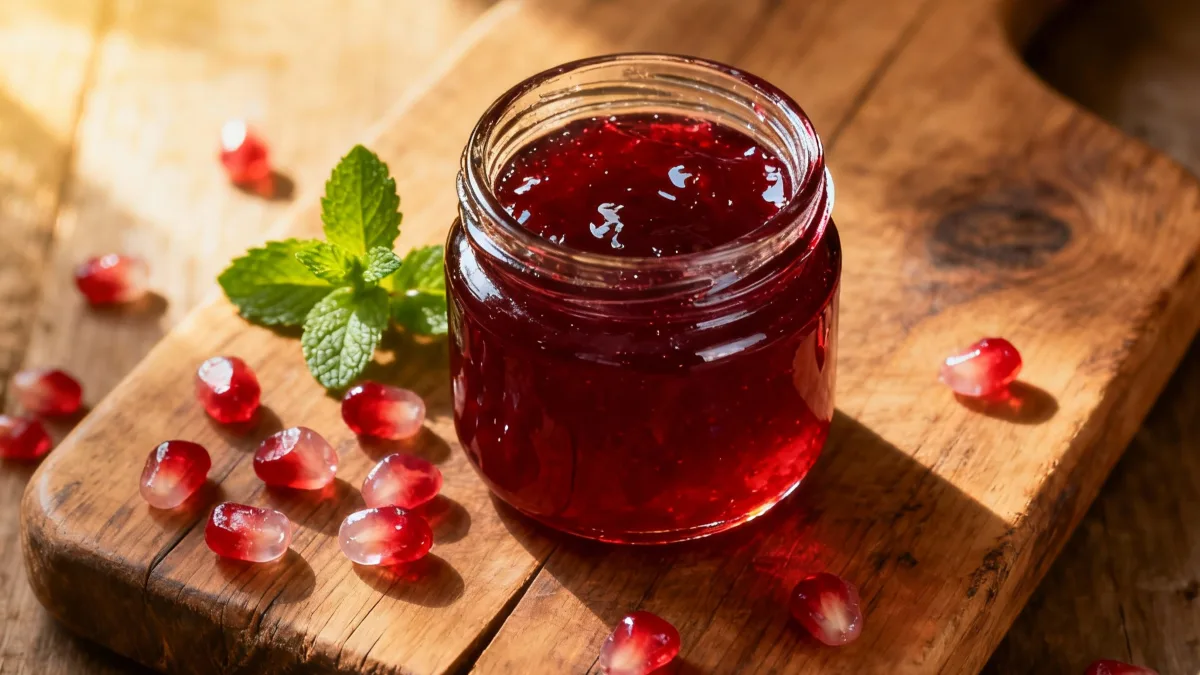
Homemade Pomegranate Jelly
Ingredients
Method
- Sterilize five half-pint jars and their lids by boiling them in water for 10 minutes. Keep warm until ready to fill.
- In a large, heavy pot, combine pomegranate juice and lemon juice. Whisk in the pectin until completely dissolved.
- Bring the mixture to a rolling boil over high heat, stirring constantly.
- Add the sugar all at once and stir until fully dissolved. Return to a full, hard boil that cannot be stirred down, and boil for 1–2 minutes while stirring constantly.
- Remove from heat and skim off any foam from the surface using a metal spoon.
- Carefully ladle the hot jelly into prepared jars, leaving about ¼ inch headspace. Wipe rims clean, place lids, and screw on bands until fingertip-tight.
- Process jars in a boiling water bath for 5 minutes (adjust time for altitude if needed). Remove and let cool on a towel for 12–24 hours until sealed.
- Store sealed jars in a cool, dark place for up to 1 year. Refrigerate any unsealed jars and use within 3 weeks.