

Start with a hot slice of bread, a cup of tea, and a stubborn urge to celebrate something green. I’ve baked this Irish soda bread more times than I can count, and every time it steals the show at brunch. Want something quick, rustic, and actually tasty for St. Patrick’s Day? You’re in the right place.
I always keep buttermilk on standby for this one — it’s the secret that gives the loaf its tender crumb without any yeast drama. If you like a playful, boozy pairing, FYI I once served this with a homemade cream soda and ended up with happy guests and empty plates. Check out a pairing that inspired me here: homemade real fruit Irish cream soda.
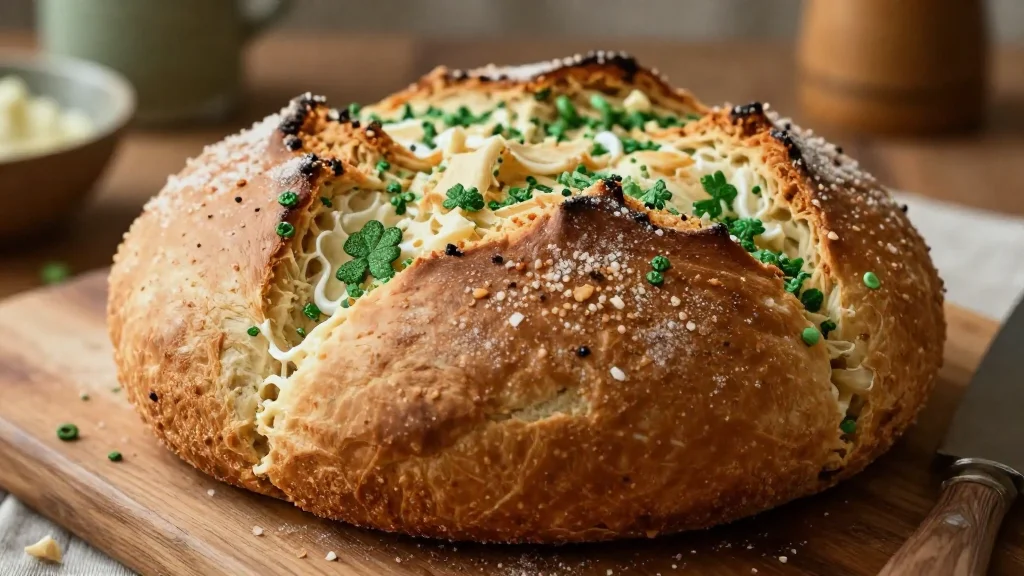
Why You’ll Love This Recipe
- Fast to make: No rising time, so you finish this in under an hour.
- Minimal ingredients: You likely have everything in your pantry already.
- Rustic flavor: The crust gets delightfully crisp while the inside stays soft.
- Adaptable: Sweet, savory, or studded with raisins—this bread plays nice.
- Perfect for celebrating: It looks festive and tastes homey, which equals instant approval.
Ingredients You’ll Need
- 3 cups all-purpose flour — I use a spoon-and-level technique for accuracy.
- 1 tsp baking soda — the actual leavening hero.
- 1 tsp salt — balances the flavors.
- 1 tbsp sugar — optional, but I like a touch of sweet.
- 2 tbsp cold butter, diced — for a tender crumb and richer flavor.
- 1 cup buttermilk — essential; don’t skip.
- 1 large egg — helps with structure and color.
- 1 cup raisins or currants (optional) — traditional, but I’ll forgive you if you skip them.
- Zest of 1 lemon (optional) — adds bright lift if you want a fresher loaf.
Bold takeaways: use buttermilk and baking soda correctly for a true soda bread.
How to Make (Step-by-Step)
Method
- Mix dry ingredients. Whisk the flour, baking soda, salt, and sugar in a large bowl. Keep the mixture airy; don’t compact it.
- Cut in the butter. Add the cold, diced butter and use your fingers or a pastry cutter to combine until the mixture resembles coarse crumbs. Yes, your hands will get messy. That’s part of the fun.
- Add raisins and zest. Toss in your raisins/currants and lemon zest so they spread evenly.
- Combine wet ingredients. Whisk the egg into the buttermilk, then pour into the dry mix. Stir gently with a fork until the dough just comes together. Don’t overwork the dough — tough bread equals sad bread.
- Shape the loaf. Turn the sticky dough onto a floured surface and shape into a round about 1.5–2 inches thick. Place on your prepared baking sheet or skillet.
- Score the top. Use a sharp knife to cut a deep cross, about 1/2 inch. Baker’s legend says the cross lets the fairies out. I won’t argue.
- Bake. Slide the loaf into the oven and bake 30–35 minutes until golden brown and a skewer comes out clean.
- Cool briefly. Let the loaf rest 10–15 minutes before slicing. Resist instantaneous slicing temptation; you’ll avoid a gummy center.
Pro Tips for the Best Results
- Use cold butter: I keep it in the fridge and dice it right before mixing. Cold fat creates flakier texture.
- Don’t overmix: Stir until the dough holds together. Stop there.
- Check doneness with a thermometer: Aim for 200°F (93°C) internal temp if you want precision.
- Score deeply: The top cross helps the loaf bake evenly and looks authentic.
- Swap flours cautiously: Use up to 25% whole wheat; more makes the loaf denser.
- Fresh baking soda matters: Old soda gives flat results. Test by adding 1 tsp to vinegar — it should fizz immediately.
- Cast iron = extra crisp crust: I always reach for my skillet when I crave that browned, crunchy exterior.
Fun Variations & Topping Ideas
Variations:
- Traditional Raisin: Add 1 cup raisins and a tablespoon of sugar for a classic loaf.
- Savory Cheddar & Herb: Replace sugar with 1 tsp garlic powder, fold in 1 cup grated cheddar and 2 tbsp chopped chives.
- Whole Wheat Rustic: Use 2 cups AP flour + 1 cup whole wheat for a nuttier flavor.
- Sweet Orange & Cranberry: Substitute lemon zest with orange, add ¾ cup dried cranberries, and increase sugar to 2 tbsp.
Toppings:
- Butter and jam — the easiest, and honestly my favorite.
- Sour cream and smoked salmon — bold move, but delicious.
- Honey and sharp cheddar — sweet meets salty in the best way.
- Compound butter (garlic-herb) — slather it on warm slices and watch guests swoon.
Storing and Reheating
- Refrigerating: Wrap the cooled loaf tightly in plastic wrap or a reusable bag. Store in the fridge for up to 4 days. The fridge helps if you live in a warm climate.
- Freezing: Slice the loaf and freeze individual slices in a freezer bag for up to 3 months. Thaw at room temperature or toast from frozen.
- Reheating:
- Oven method: Preheat to 350°F (175°C), wrap the loaf in foil, and warm for 10–15 minutes for a revived crust and soft inside.
- Toaster/Toaster oven: Toast slices directly for a crisp edge and warm center.
- Microwave: Use this only for single slices and 10–15 seconds bursts — it softens quickly, not crisps.
Leftover ideas
- Bread pudding: Cube the leftover bread and turn it into a comforting dessert with custard and raisins.
- Stuffing: Use torn chunks as a stuffing base with herbs and sausage.
- French toast: The slightly denser crumb makes a killer French toast.
- Croutons: Cube, toss with oil and salt, and bake until crunchy.
- Sandwich base: Thick slices hold up to robust fillings like roast beef or roasted veggies.
Frequently Asked Questions (FAQ)
What makes soda bread different from regular bread?
Soda bread uses baking soda and acidity (buttermilk) as a leavening system, so it rises instantly without yeast. That speed makes it perfect when you want fresh-baked bread without the wait.
Can I make this without buttermilk?
Yes. Mix 1 cup milk with 1 tbsp lemon juice or vinegar and let it sit 5 minutes. The milk will sour enough to react with the baking soda. I do this when I run out of buttermilk, and it works fine.
Why did my bread come out dense?
You probably overmixed or used old baking soda. Mix only until combined and test your soda before use. Also, don’t pack the flour into the measuring cup.
Can I add seeds or nuts?
Absolutely. Add up to 1 cup total of seeds or chopped nuts. They add crunch and flavor. I toss them with a bit of flour first so they don’t sink.
How do I get a crispier crust?
Bake in a preheated cast-iron skillet or place a small oven-safe dish with water on the lower rack to create steam. Don’t wrap the loaf right after baking; let it rest uncovered for a bit.
Conclusion
This Homemade St. Patrick’s Day Irish Soda Bread recipe gives you quick, reliable comfort bread with minimal fuss and maximum charm. You’ll love how the buttermilk and baking soda team up to produce a tender, slightly tangy loaf that pairs with everything from jam to smoked salmon. Try a variation or two, and don’t forget to score that cross — it makes the loaf look intentionally rustic, not like you panicked with a knife.
If you want another close-to-traditional take or inspiration, I found a lovely version worth comparing at St. Patrick’s Day Irish Soda Bread – Yummi Haus.
Please leave a comment and rating if you try this — I read every one and I genuinely care whether your loaf turned out crumbly or glorious. Which variation will you try first? IMO, you can’t go wrong with cheddar and chive.
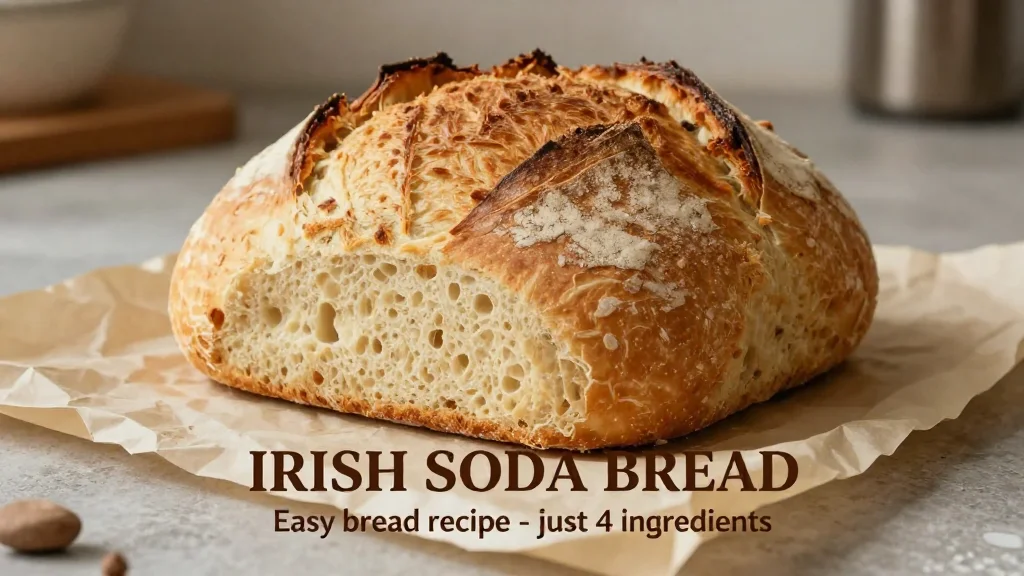
Irish Soda Bread
Ingredients
Method
- Preheat your oven to 425°F (220°C) and line a baking sheet or prepare a cast-iron skillet.
- In a large bowl, whisk together the flour, baking soda, salt, and sugar.
- Cut in the cold, diced butter using your fingers or a pastry cutter until the mixture resembles coarse crumbs.
- Add in the raisins/currants and lemon zest to ensure even distribution.
- In a separate bowl, whisk the egg into the buttermilk, then pour this mixture into the dry ingredients.
- Stir gently with a fork until the dough just comes together; do not overwork it.
- Turn the sticky dough onto a floured surface and shape it into a round about 1.5-2 inches thick.
- Place the loaf on your prepared baking sheet or skillet.
- Score a deep cross on the top of the loaf using a sharp knife.
- Bake for 30-35 minutes until golden brown and a skewer comes out clean.
- Let the loaf cool for 10-15 minutes before slicing to avoid a gummy center.