

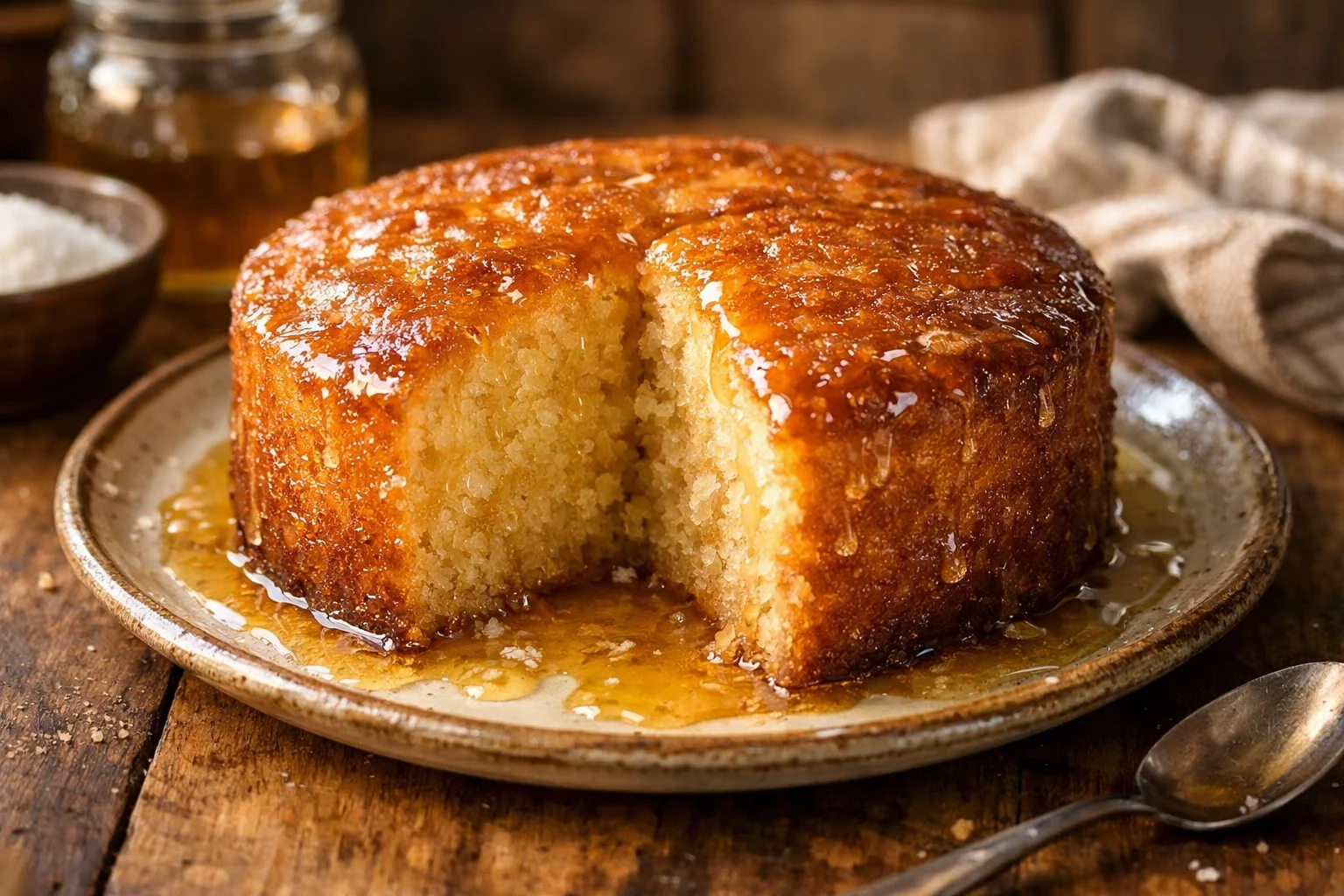
You know that cake that feels light as a cloud, soaks up a little sweet syrup, and suddenly tastes like a tiny vacation? Yep — that’s a sponge cake with sugar syrup, and I’ve made more than my fair share. I’ll be honest: I started out underestimating what a simple syrup could do. Now I treat it like culinary magic. Ever wondered why plain sponge suddenly tastes like a bakery masterpiece after a quick brush of syrup? Stick around.
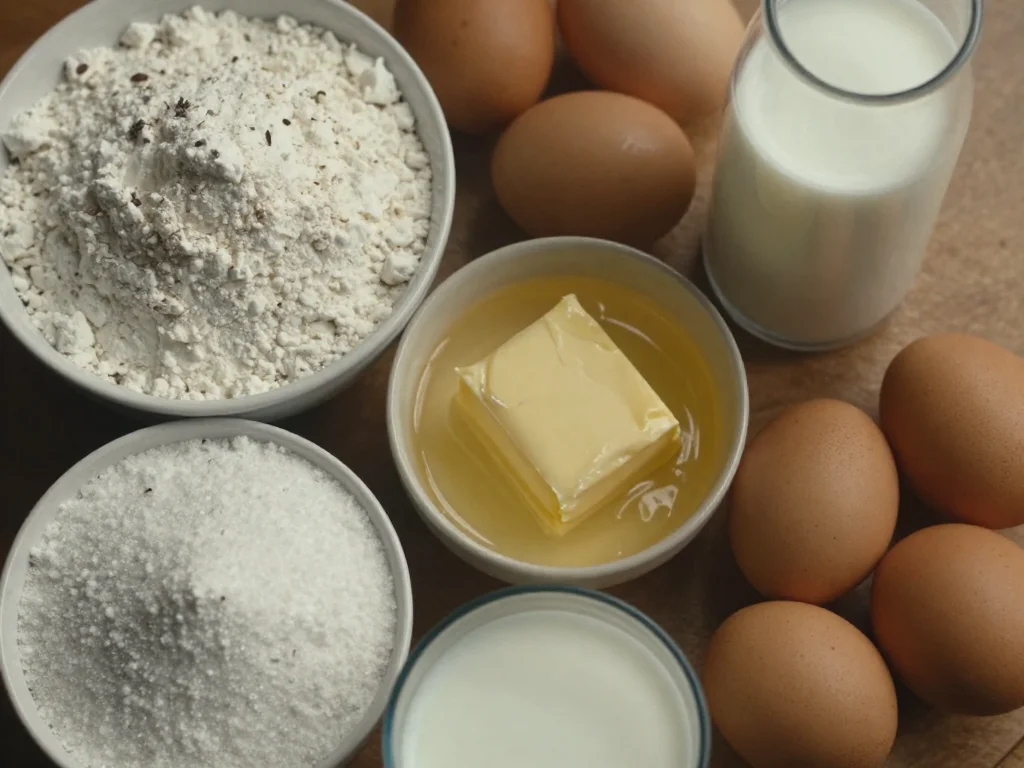
If you geek out over texture more than decoration, this recipe will make you grin. I’ll walk you through the ingredients, the method, my favorite pro tips, tasty variations, and even what to do with leftovers. Also, if you like light desserts, I recently linked a mini cheesecake recipe that pairs brilliantly with sponge cake layers — check out this mini cheesecake with chocolate and Andes mint for fun mashups.
Why You’ll Love This Recipe
- Moist, not soggy: The sugar syrup adds moisture without making the cake heavy.
- Quick to make: You can whip the batter and syrup in under an hour.
- Versatile: Use the sponge for layer cakes, trifles, or even as a base for fancy petit fours.
- Beginner-friendly: No weird techniques, no tempering chocolate or folding in flour like a surgeon.
- Customizable flavor: Add lemon, coffee, or vanilla to the syrup and you change the whole vibe.
Ingredients You’ll Need
- 2 cups all-purpose flour
- 1 cup sugar
- 4 large eggs
- 1/2 cup unsalted butter, melted
- 1 cup milk
- 1 tbsp baking powder
- 1 tsp vanilla extract
- 1/2 cup caster sugar
- 1/2 cup water
I bolded the essentials so you don’t miss them when you raid the pantry. FYI, caster sugar dissolves faster in the syrup, but granulated sugar works if you heat it a bit longer.
How to Make (Step-by-Step)
STEP 1
Preheat the oven to 350°F (175°C) and grease two cake pans. I usually line the bottoms with parchment for zero drama when unmolding. Who likes crumbling edges? Not me.
STEP 2
In a bowl, whisk together flour, baking powder, and sugar. Use a fine-mesh sieve if you feel fancy. Sifting helps the crumb stay light, but I skip it on busy weeknights and blame the oven for anything that goes wrong.
STEP 3
In another bowl, beat the eggs until they loosen up and get a bit frothy. Add the melted butter, milk, and vanilla. Combine the wet and dry ingredients gently until just mixed; don’t overwork the batter or the cake will firm up rather than stay soft. A few streaks of flour? Totally fine.
STEP 4
Pour the batter into the prepared pans and bake for 25–30 minutes or until a toothpick comes out clean. I rotate pans once halfway through if my oven acts like it has opinions. Let the cakes cool in the pans for 10 minutes, then transfer to a rack.
STEP 5
For the sugar syrup, heat caster sugar and water in a saucepan until dissolved. Stir, don’t rush. Allow the syrup to cool slightly before using. Want to flavor it? Add a strip of lemon peel, a splash of rum, or a spoonful of coffee granules while it simmers.
STEP 6
Once the cakes are done and cooled, brush the sugar syrup over the cakes before serving. Apply a thin layer first; the sponge will drink it up. Go back for a second pass if you want extra moistness. Serve plain, with cream, or with fresh fruit.
Pro Tips for the Best Results
- Room-temperature eggs help the batter emulsify better. I take mine out 30 minutes before baking.
- Melted butter gives flavor; use clarified butter if you want a more neutral taste.
- Don’t overmix after adding flour — stop when it looks homogeneous. Overworking develops gluten and makes the cake dense.
- Brush syrup while cake is warm to maximize absorption. Cold cake resists syrup like a stubborn teenager.
- Measure flour properly: spoon into the cup and level off. Packed flour means a dry cake.
- Flavor syrup during simmer for infused results — vanilla, citrus peel, spices, or liqueur all work.
- Use a toothpick to test doneness; also watch the edges — they brown before the center is done.
Fun Variations & Topping Ideas
Variations:
- Lemon-syrup sponge: Add zest to batter and a lemon peel to the syrup for brightness.
- Coffee sponge: Dissolve instant espresso in the milk before mixing for a subtle coffee kick.
- Almond sponge: Replace 1/4 cup flour with ground almonds for a nutty crumb.
- Rum-soaked layers: Add a tablespoon of rum to the syrup for adult-only treats.
Toppings:
- Fresh berries and whipped cream — classic and gorgeous.
- Chocolate ganache — melt chocolate with cream and pour; the syrup keeps layers moist beneath the ganache.
- Caramelized bananas and a dusting of cocoa powder for drama.
- Powdered sugar and a lemon twist when you want to keep it simple.
Storing and Reheating
Keep leftover cake in an airtight container in the fridge for up to 4 days. The sugar syrup helps preserve moisture, so the cake stays pleasant longer than plain sponge. To reheat, warm slices at 300°F (150°C) for 5–8 minutes or microwave for 10–15 seconds on medium — you want it warm, not lava-hot. If you plan to store without refrigeration, keep it covered at room temperature for 1–2 days only.
Leftover ideas
- Trifle: Layer sponge, custard, fruit, and whipped cream for a suicide mission into deliciousness.
- Cake cubes: Toss with syrup and freeze for quick dessert parfaits.
- French toast: Dip slices in a custard mix and pan-fry for a decadent breakfast.
- Ice cream accomplice: Crumble over vanilla ice cream; sprinkle almonds and call it fancy.
Frequently Asked Questions (FAQ)
Do I have to use caster sugar for the syrup?
Nope. I use caster sugar because it dissolves faster, but granulated sugar works fine if you heat it long enough. The end result tastes the same once the sugar fully dissolves.
Can I make this gluten-free?
Yes. Replace the all-purpose flour with a 1:1 gluten-free flour blend that contains xanthan gum. Expect a slightly different crumb, but the syrup still saves the day.
How long can I keep the syrup?
Store the syrup in the fridge in a sealed jar for up to 2 weeks. Reheat slightly before brushing if it crystallizes or thickens.
Can I skip the butter for a lighter cake?
You can substitute the butter with an equal amount of neutral oil. The texture will stay soft, but you’ll lose some buttery flavor. I do this when I want the cake to be more neutral for layered desserts.
Conclusion
This sponge cake with sugar syrup gives you a simple, fail-safe way to turn an ordinary cake into something memorable. You get a light crumb, moisture that lasts, and a canvas for endless flavor experiments. If you want a deeper dive into syrup techniques and flavor ideas, check out this handy guide: Sugar Syrup for Cakes – Recipe + Flavours – Sweetness and Bite. I’d love to hear how your cake turns out — leave a comment and a rating so we can commiserate over oven quirks or celebrate a perfect rise. Trust me, you’ll want to make this again.
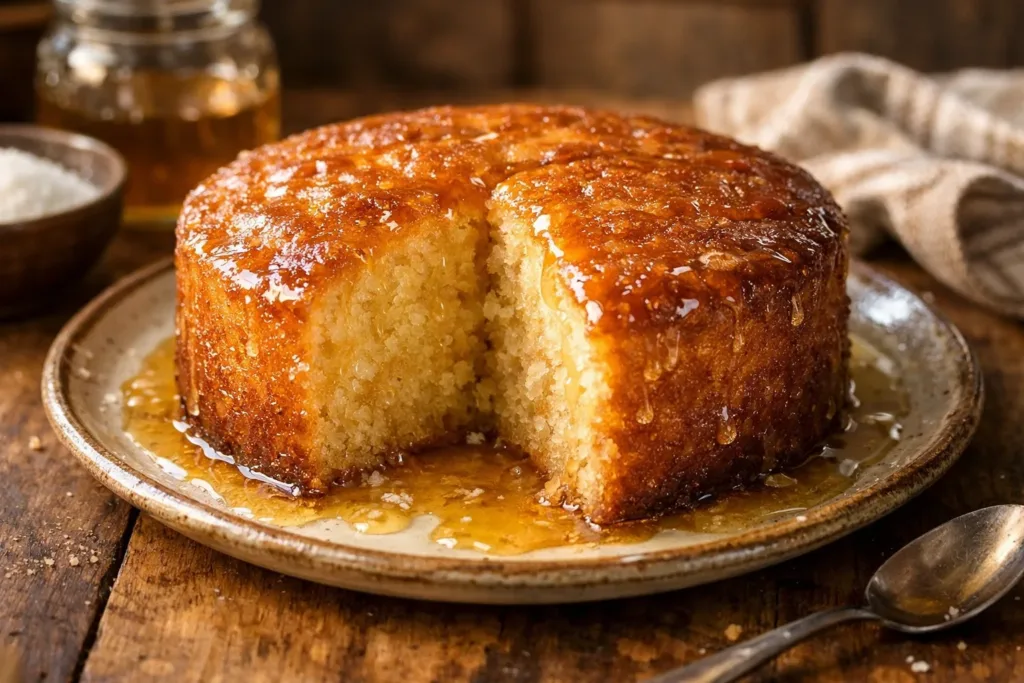
Sponge Cake with Sugar Syrup
Ingredients
Method
- Preheat the oven to 350°F (175°C) and grease two cake pans.
- In a bowl, whisk together flour, baking powder, and sugar.
- In another bowl, beat the eggs until frothy. Add melted butter, milk, and vanilla. Combine the wet and dry ingredients until just mixed.
- Pour the batter into the prepared pans and bake for 25–30 minutes until a toothpick comes out clean.
- Let the cakes cool in the pans for 10 minutes, then transfer to a rack.
- Heat caster sugar and water in a saucepan until dissolved and allow to cool slightly before using.
- Optional: Add flavorings like lemon peel, rum, or coffee granules while simmering.
- Brush the sugar syrup over the cooled cakes before serving. Serve plain, with cream, or fresh fruit.